
AI vs Human Creativity: Who Wins?
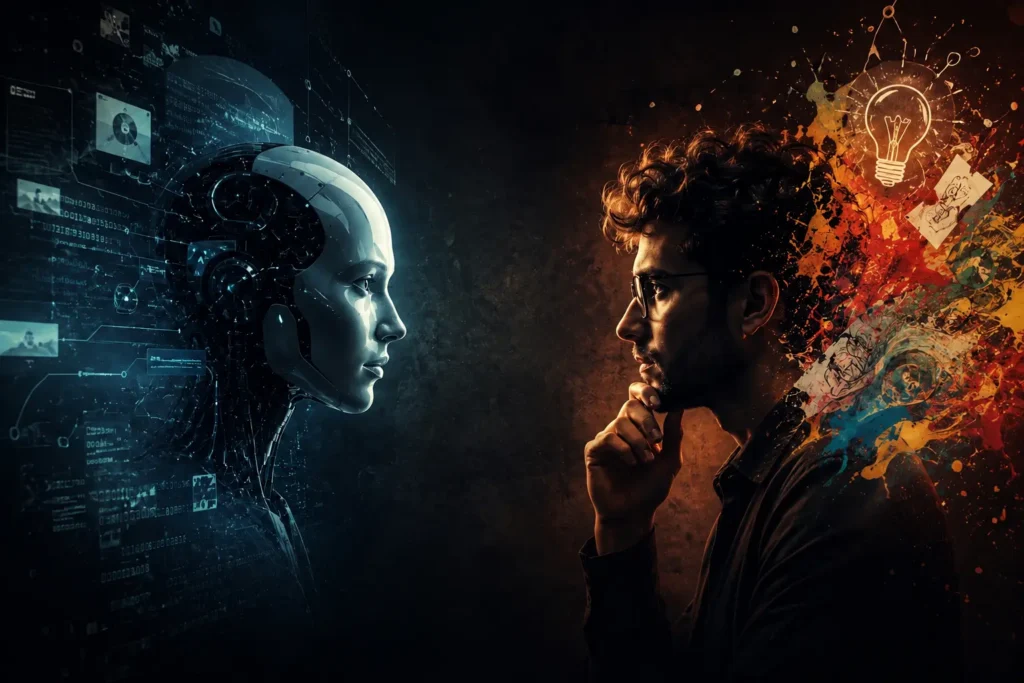
Can Artificial Intelligence Replace Human Creativity?
Artificial Intelligence (AI) has become one of the biggest topics in recent years. From writing blog posts and creating images to generating videos and designing websites, AI is changing the way we work. It has made many tasks faster, easier, and more affordable for businesses of all sizes.
But one question continues to spark debate:
Can AI really replace human creativity?
Some people believe AI is the future and will eventually do everything humans can. Others believe creativity is something only humans truly possess.
The truth is somewhere in the middle.
Instead of asking who wins, perhaps the better question is: How can AI and human creativity work together?
Let’s explore.
What Is AI Creativity?
AI can generate content by learning from huge amounts of existing information. It analyzes patterns, language, images, and data to create something new based on what it has learned.
Today, AI can:
- Write blog articles
- Generate social media captions
- Design logos
- Create marketing ideas
- Edit videos
- Build websites
- Generate realistic images
- Help with coding
These tools save hours of work and improve productivity.
However, AI doesn’t truly “think” or “feel.”
It predicts the next best answer based on patterns.
That is very different from human creativity.
What Makes Human Creativity Special?
Human creativity comes from experience, emotions, imagination, curiosity, and personal stories.
A designer doesn’t just choose colors.
They choose colors because they understand the emotions a brand wants to create.
A writer doesn’t simply arrange words.
They share experiences, solve problems, and connect with readers emotionally.
An entrepreneur creates ideas based on failures, lessons learned, conversations, and real world observations.
These are things AI cannot genuinely experience.
AI has information.
Humans have perspective.
And that perspective makes creative work meaningful.
Where AI Performs Better
Let’s be honest.
AI is incredibly useful.
For repetitive and time consuming tasks, it often performs much faster than humans.
For example, AI can:
- Generate multiple content ideas in seconds
- Research topics quickly
- Summarize long documents
- Suggest headlines
- Translate content
- Improve grammar
- Analyze marketing data
For businesses, this means saving time and increasing productivity.
Instead of spending hours brainstorming, marketers can use AI to create a strong first draft and then improve it.
This allows professionals to focus on strategy instead of repetitive work.
Where Humans Still Lead
Even though AI is powerful, there are areas where people continue to have a clear advantage.
Humans understand:
- Emotions
- Culture
- Humor
- Personal experiences
- Empathy
- Relationships
- Ethics
- Storytelling
Imagine two advertisements promoting the same product.
One is written entirely by AI.
The other includes a real customer’s journey, challenges, and success story.
Most people will naturally connect with the second one because it feels authentic.
People trust people.
That’s why genuine stories continue to outperform generic content.
The Best Results Come From Working Together
Many people think AI and humans are competitors.
In reality, they’re partners.
Think of AI as an assistant rather than a replacement.
For example, a digital marketer might use AI to:
- Generate blog ideas
- Create an outline
- Suggest keywords
- Draft social media posts
Then, the marketer adds:
- Personal experience
- Industry knowledge
- Client examples
- Practical advice
- Brand voice
The final content becomes much stronger than either AI or a human could create alone.
AI speeds up the process.
Humans add meaning.
Why Google Still Values Human Content
Google’s goal has always been simple:
Show users the most helpful and trustworthy content.
That’s where the E E A T framework becomes important.
E E A T stands for:
- Experience
- Expertise
- Authoritativeness
- Trustworthiness
Google doesn’t reward content simply because it was written by AI or by a human.
Instead, it rewards content that is useful, accurate, original, and trustworthy.
For example, if you’re writing about SEO or digital marketing, sharing your own experiences, explaining what has worked in real projects, and providing practical advice helps build credibility.
That’s something AI alone cannot genuinely provide.
The strongest content combines AI efficiency with human knowledge and real world experience.
How Businesses Can Use AI Responsibly
The smartest businesses don’t replace people with AI.
They empower people with AI.
Here are a few practical ways to use it:
- Brainstorm content ideas
- Create first drafts
- Improve grammar and readability
- Research industry trends
- Organize data
- Generate content calendars
- Speed up repetitive tasks
After that, add your own expertise, examples, opinions, and brand personality.
This creates content that feels natural, helpful, and trustworthy.
Human Stories Build Stronger Brands
Think about the brands you admire.
You probably remember their stories more than their advertisements.
Stories create emotional connections.
Customers enjoy hearing:
- Why a business started
- Problems it solved
- Lessons learned
- Customer success stories
- Behind-the-scenes experiences
These personal moments cannot be copied from a database.
They come from real life.
That is why human creativity continues to matter.
The Future Is Collaboration
As AI continues to improve, it will become an even more valuable tool for businesses, marketers, designers, and creators.
But creativity is more than generating words or images.
It’s about solving problems, understanding people, building trust, and creating meaningful experiences.
AI can help us work faster.
Humans help us work smarter.
The future isn’t about choosing one over the other.
It’s about combining the strengths of both.
Businesses that learn to use AI while maintaining authenticity, transparency, and expertise will have a clear advantage.
Final Thoughts
So, who wins AI or human creativity?
The answer isn’t AI.
And it isn’t humans alone.
The real winner is the person who knows how to use both effectively.
AI is an incredible tool that can improve productivity, generate ideas, and simplify complex tasks. But it cannot replace human experiences, emotions, critical thinking, or genuine creativity.
If you create content for your business or personal brand, use AI to support your work not define it. Share your experiences, provide practical advice, and write with honesty. That’s what your audience values, and it’s exactly what Google’s E E A T framework encourages.
In the end, technology will continue to evolve, but trust, authenticity, and human connection will always remain at the heart of great content.
Author info : Muhammed Farshan—Freelance performance marketer in Kerala